

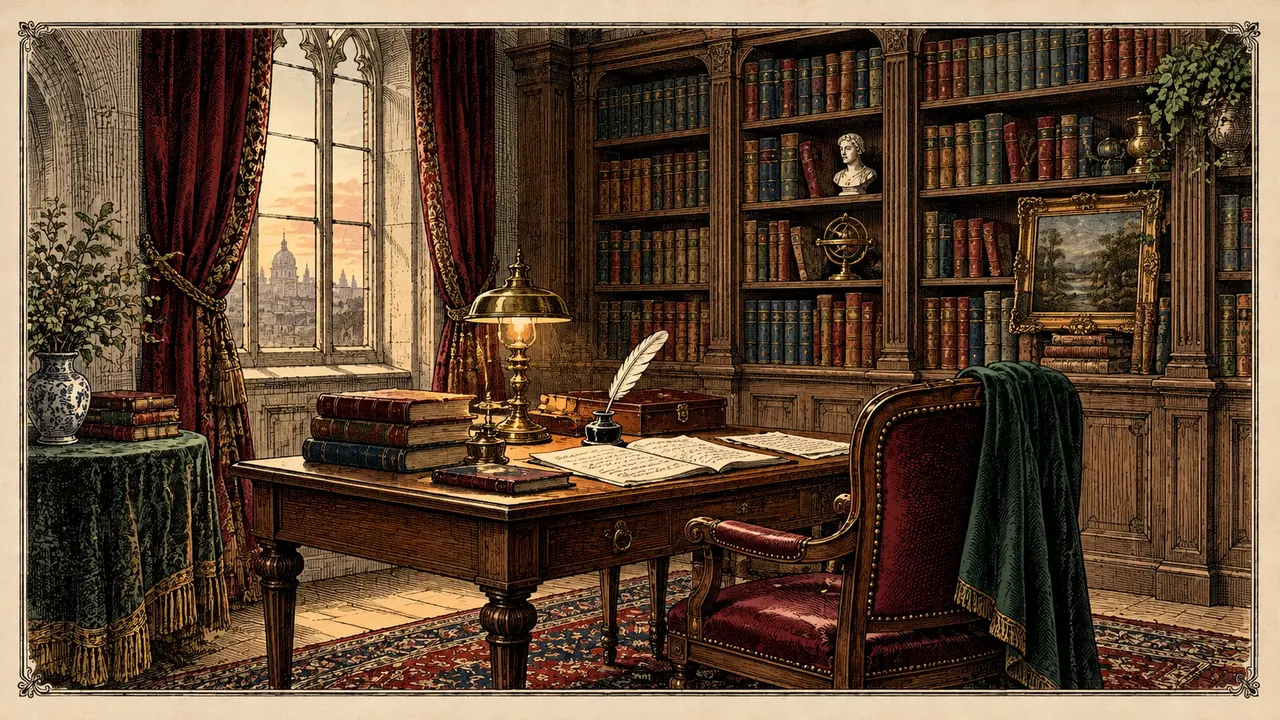
In 1345, English bibliophile Richard de Bury described Paris’s bookshops as “more aromatic than stores of spicery,” likening books to sweet‑smelling flowers that could perfume a mind like a panther’s scent. His observations in the Philobiblion celebrated the idea that reading “sweetened the belly of one’s memory.”
Medieval writers across Europe and the Middle East echoed this view. Persian scholar Al‑Ghazali compared idea‑collectors to a pot of musk, while Greek and later philosophers such as Aristotle and Hegel warned that the nose is prone to prejudice and unreliable for knowledge. Immanuel Kant dismissed smell as “ungrateful” and “subjective,” and Jean‑Jacques Rousseau called it the “sense of the imagination.”
Satirists of the seventeenth and nineteenth centuries mocked the notion of fragrant learning. Jean de La Bruyère derided libraries as smelling like tanneries, and Victorian dramatist Douglas William Jerrold ridiculed book‑collectors who “took a good sniff” of unread volumes. In 1920s Japan, critic Uchida Roan likened bibliophiles to “book‑eating insects” delighted by the “sweet scent of old ink.”
In China, the word shuxiang means both “acknowledge” and “the scent of books.” Elite collectors in the seventeenth and eighteenth centuries prized libraries that “perfume the family line with the scent of ink.” Mi Fu, a Song‑era painter‑poet, advised that aged volumes retain a peculiar fragrance, and in 1781 a collector confirmed a Song‑dynasty edition by its “ancient fragrance.”
Japanese philosopher Kuki Shūzō, in 1920s Paris, noted the “fragrance of past wisdom” while walking the book‑lined streets of St. Michel. He later wrote on iki, arguing that scent and memory are inseparable, echoing Marcel Proust’s belief that smells locate us “simultaneously in the present and in the past.”