

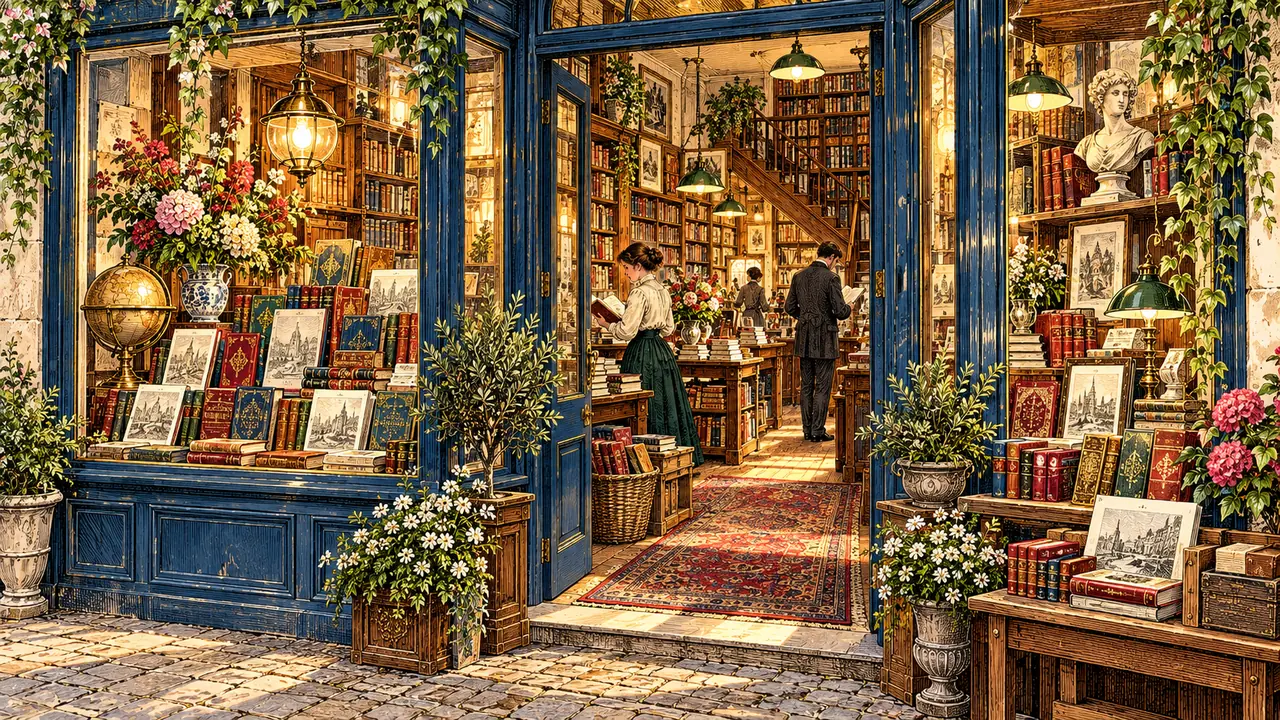
The newest fixture in the new bookshop is a shelf of old books. Across the independent sector, the second-hand section — banished decades ago as a brand contaminant, the physical admission that not every book in the building was fresh from the publisher — is returning to the floor, and the shops embracing it report not an awkward compromise but a strategic asset: margin where none existed, footfall from a constituency new-book retail had quietly abandoned, and a sustainability story that arrives, unlike most, already believed.
The economics, once scandalous to consider, now compute with embarrassing ease. A charity shop paperback bought for pennies and sold at two-thirds of its new price carries a gross margin that new stock, with its trade discounts and freight costs, can only envy. The section needs no publisher relationship, no minimum order, no returns processing — inventory that arrives over the counter, priced by the same instincts that curate the new shelves. Several shops we visited report the second-hand bay running at margins comparable to their bestselling new categories, on an investment measured in shelf space alone.
The footfall argument is subtler and, to many owners, more valuable. The used-book browser was long profiled as the wrong customer: price-driven, brand-indifferent, unlikely to convert to new-book buying. The data from shops with mature second-hand sections tells a different story — the browser who comes for the old comes back for the new, discovers the events calendar through the bargain bin, buys the new release of the author whose old paperback they just rescued. The second-hand shelf functions, in the phrase several owners independently used, as the shop’s front door: the lowest-friction entry into a relationship the new shelves then deepen.
The curation challenge is the trade’s honest frontier. Second-hand stock is not ordered; it arrives — in donations, in estates, in the cheerful chaos of what the neighbourhood is finished with. The shops succeeding treat it with the same curatorial seriousness as their frontlist: themed tables of vintage crime, collectable first editions properly priced and honestly described, a children’s classics bay where worn spines signal love rather than neglect. The failures are instructive: the shelf that fills with unsellable clutter, the pricing that either insults or excludes, the hygiene anxieties of browsers raised on new-book sterility. The second-hand section, like everything in bookselling, is a craft or it is a junk room.
The sustainability ledger needs its honest paragraph, and the shops we spoke to gave it willingly. Every second-hand sale is, undeniably, a book consumed without new paper, new printing, new freight — a carbon footprint of essentially zero, wearing its virtue on its foxed jacket. But the same sale displaces, at the margin, a new-book purchase, and the shop that ignores that displacement is not building sustainability but cannibalising its own supply chain. The mature position, increasingly common, is integration: the second-hand shelf as gateway rather than substitute, the used copy of the first novel displayed beside the new release of the third — the shop selling the reader, both times, to the author.
The publishers, for their part, have watched the return with studied calm. No formal position exists; the relationship between new and used has always been the industry’s ambivalent marriage, and a bookshop shelf of second-hand stock is neither the remainder table nor the online marketplace that publishers actually fear. Several rights and marketing directors, speaking off the record, allowed that a healthy second-hand shelf in an indie is, on net, better for their authors than the alternative — an indie without the margin to survive, on a high street without a bookshop at all.
What the return of the old shelf ultimately restores is a quality the trade has spent decades pricing out: the book as object with a past. The new bookshop that sells only new books asserts, without quite saying so, that reading begins at purchase; the shop with a second-hand section knows better, and builds its business on the knowledge. The worn paperback on the bargain table is not the new shop’s embarrassment. It is its memory — and, increasingly, its margin.