

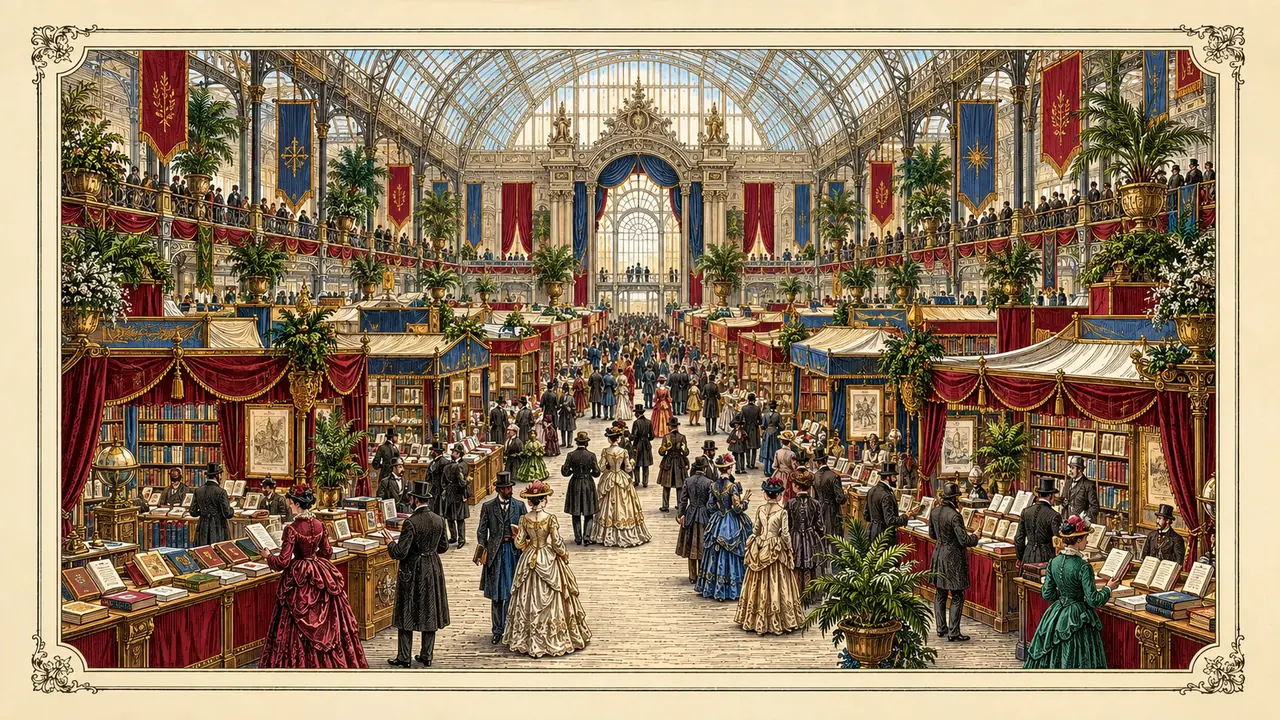
The London Book Fair’s announcement of its next edition’s professional programme confirms what the rights market’s drift has been signalling for two seasons: the fair that built its reputation on translation rights is rebalancing toward the formats that now move its biggest cheques. The 2027 programme, previewed to the trade this month, doubles the floor space and programming allocated to audio and screen rights — a bet that London’s competitive position in the polycentric calendar, chronicled across these pages, now runs through the adaptation economy.
The rationale is commercial and geographic at once. Audio’s growth, chronicled across this publication for two years, has made the format a lead right rather than a subsidiary; the screen adaptation market, whose options and packages now anchor many titles’ international value before a translation is sold, has made the producer and the platform scout as consequential at the rights table as the foreign publisher. London, with its concentration of production companies, audio studios and literary agencies, holds a structural advantage in both markets that Frankfurt’s translation-centred tradition and the regional fairs’ discovery focus cannot easily match. The fair’s organisers, in the language of their announcement, are building where the trade’s money now is.
The programme’s architecture borrows from the circuit’s best practices. A dedicated audio and screen rights floor — separate from the traditional rights centre, with its own meeting infrastructure and accreditation — hosts the producers, scouts and platform executives whose calendars, several organisers noted, do not align with the traditional fair rhythm. Matchmaking services, borrowed from the regional circuit’s innovations, pair authors’ representatives with adaptation buyers; the seminar programme leans into the practical — the option deal’s anatomy, the audio rights auction’s choreography — with sessions led by the agents and producers who run those markets daily.
The trade’s response splits along familiar lines. The audio and screen communities, long the circuit’s informal addenda, welcome the legitimacy: several production scouts interviewed described London’s traditional fair as useful but peripheral to their work, and the dedicated infrastructure as the difference between attending and operating. The translation-centric rights sellers are more ambivalent — some welcoming the new buyers’ energy, others privately concerned that the adaptation focus tilts the fair’s centre of gravity away from the book-to-book commerce that built it. The organisers’ answer, in briefings, is that the floors are additive, not substitutive: the translation rights centre remains, and the new money makes the whole fair more worth attending.
The competitive context rewards attention. London’s repositioning is, in part, a response to the calendar’s polycentrism — the regional and polycentric markets chronicled across these pages that have diluted the old circuit’s concentration. A fair that owns a differentiated segment, the strategists argue, defends its position better than a fair that competes on the traditional segment’s terms. The audio and screen focus gives London exactly that: a segment where its geographic and industrial advantages are structural rather than historical, and where the new entrants — the Warsaw market, the growing regional circuit — have not yet built competing infrastructure.
The honest caveats are those of any repositioning. The adaptation economy is volatile — the platform spending cycles that drive it have contracted before and will again — and a fair that anchors its growth to the screen market’s appetite inherits that volatility. The audio market’s consolidation, with the platform dynamics covered elsewhere in these pages, means the dedicated floor’s key buyers are few, and their attention is negotiated as fiercely as any rights deal. And the risk, noted by several veterans, is that a fair’s identity is harder to broaden than its floor plan: the London brand, built over decades on the book-to-book trade, must now carry a second meaning without losing the first.
The deeper significance lies in what the repositioning acknowledges. The rights market’s centre of gravity has shifted — from the translation that carried the twentieth century’s international trade to the adaptation that carries the twenty-first’s — and the calendar’s institutions are following the money with the pragmatism that has kept them relevant through a century of changes. The book remains the origin of the value; the formats that now amplify it have become, in London’s calculation, worth a floor of their own. The fair that reinvented itself as the industry’s rights exchange, twice in its history, is attempting a third reinvention. The circuit, which respects nothing but results, will grade the attempt in the deals that close on the new floor — and the queues at its entrance will tell the story before the press releases do.