

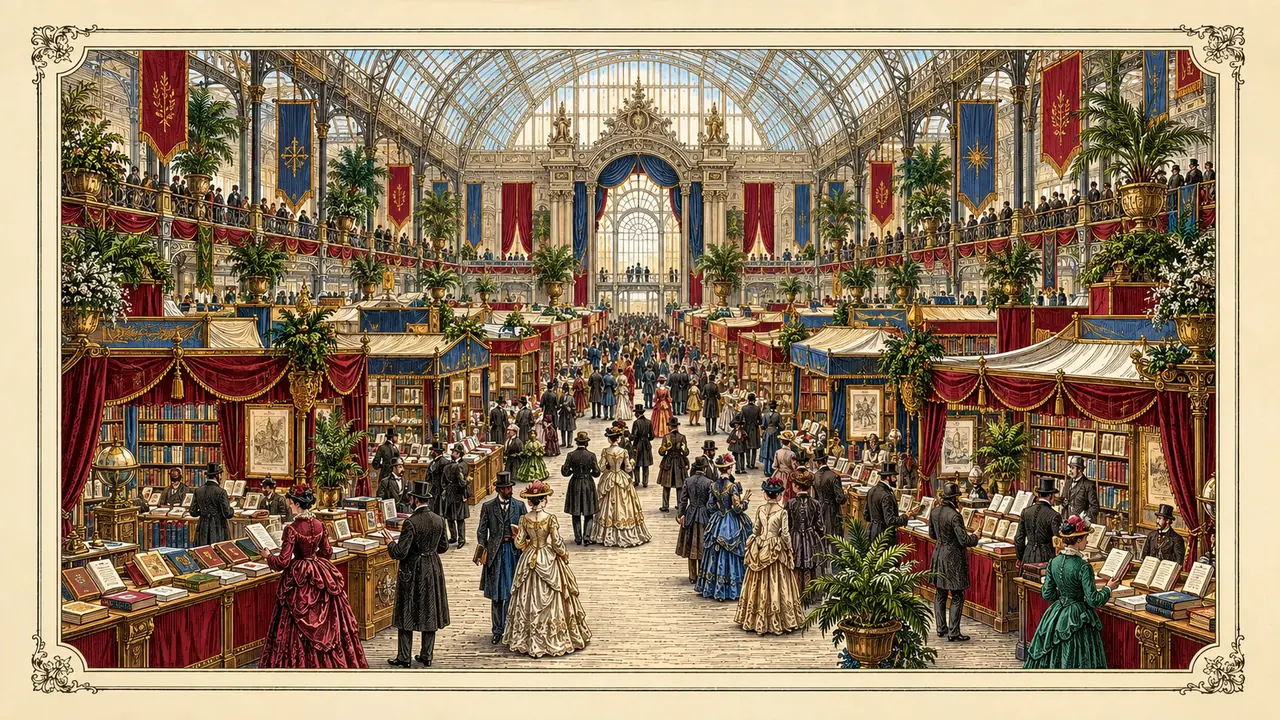
The newest room in the rights calendar opened its doors in Warsaw this week, and the queue at the entrance told its own story. The Warsaw Book Fair’s inaugural Central European Rights Market — a professional programme bolted deliberately onto the fair’s public-facing scale — is the region’s most ambitious attempt to date to convert its publishing energy into rights-market infrastructure, and its first edition has drawn a professional attendance that veterans of the circuit describe as remarkable for a debut.
The rationale is geographic and cultural at once. Central Europe — Poland, the Czech Republic, Hungary, Slovakia, the Baltics, and the publishing cultures orbiting them — has spent three decades on the rights map as a source rather than a venue: its literature travelling to Frankfurt and London for sale, its rights buyers flying west to buy. The region’s publishing industries, however, have matured past that dependency. Polish crime fiction’s international success, the Czech literary renaissance, the Hungarian list’s quiet strength — the catalogue now exists to justify a market of its own, and Warsaw, the region’s largest publishing centre, has claimed the venue.
The programme’s design betrays its founders’ study of the established circuit. Rights tables with pre-scheduled meetings, scout accreditation, a professional programme running parallel to the public fair — the infrastructure is imported wholesale, with one deliberate adaptation: the market’s centre of gravity is regional, with international buyers welcomed as guests rather than gatekeepers. The first edition’s floor plan reflected the philosophy: Polish and Czech rights directors holding court in their own pavilions, the German, French and anglophone scouts circulating as visitors, the programme’s panels treating translation into the region’s languages with the seriousness the circuit usually reserves for translation out of them.
The early deal flow is instructive. The region’s export strengths showed as expected — crime, literary fiction, children’s books moving westward — but the more interesting traffic ran the other direction: Central European publishers, buying in the aggregated company the market created, secured terms on international properties that their individual visits to Frankfurt had never extracted. Several international rights directors interviewed described the discovery with the candour of professionals recalibrating: the region they had treated as a sales territory was a buying consortium whose collective attention, once organised, commanded the serious treatment that scattered individual approaches never had.
The fair’s public scale gives the market an atmosphere the circuit’s veterans find disorienting and, increasingly, valuable. The Warsaw fair draws hundreds of thousands of readers; the rights market runs in rooms above their heads, and the professional attendees describe the proximity as a tonic after the hermetic professionalism of the dedicated trade fairs. The scout who lunches above a hall full of readers, one veteran observed, remembers what the books are for; the observation, repeated by several first-time attendees, suggests the model may influence the circuit beyond its region.
The challenges are those of any new market, honestly faced. The region’s rights operations remain uneven — some houses with professional rights departments, many with a rights director who is also the editor, the publicist and, on fair days, the person carrying the banner. The market’s organisers have responded with the infrastructure of mentorship: matchmaking services for the un-networked, translation funding information desks, a second-year programme already announced that will formalise the scout relationships the first edition began. The sustainability question — whether the market becomes a fixture or a fond memory — will be answered by the deals that close in the year between editions, the only metric the circuit ultimately respects.
The circuit’s weather vanes are watching with professional interest. Another polycentric point on the rights calendar — joining Sharjah, Guadalajara and the regional circuit chronicled across these pages — dilutes the old circuit’s concentration and, with it, the old gatekeepers’ share of attention. The Frankfurt establishment, when asked, responds with the graciousness of those who recognise both a compliment and a competitor: the circuit’s growth is the industry’s growth, and Warsaw’s success is proof that the market the old fairs organised was larger than the one they served.
What the Warsaw market finally inaugurates is the region’s publishing maturity, given a room of its own. Central Europe’s literature no longer needs to travel to be traded; its publishers no longer need to fly west to be heard; its readers’ appetites, hundreds of thousands strong in the halls below, no longer need to wait for the world’s permission to be served. The fair’s founders describe the ambition in terms that reach beyond their region: not another fair, but another proof that the rights business, like the literature it trades, has no centre that cannot be relocated by anyone with the books, the energy and the nerve to try.